Gameplay video
IGDB game
Soko-Ban
Released December 1, 1982Rating 71.1 (17)
Puzzle
Platforms: SG-1000 • PC-8800 Series • Commodore C64/128/MAX • Sharp X1 • TRS-80 Color Computer • DOS • Apple II • TRS-80 • FM-7 • NEC PC-6000 Series • MSX
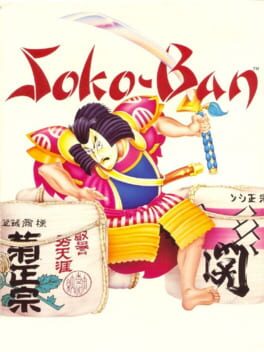
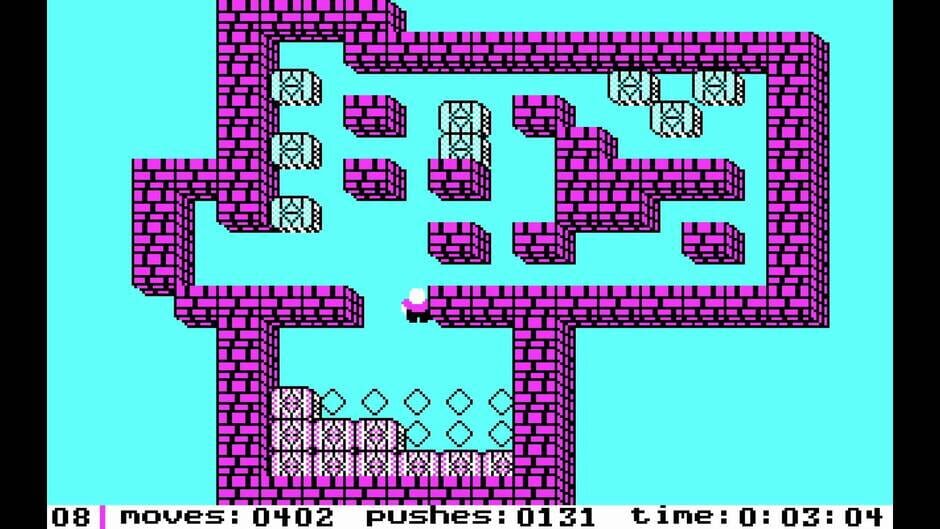
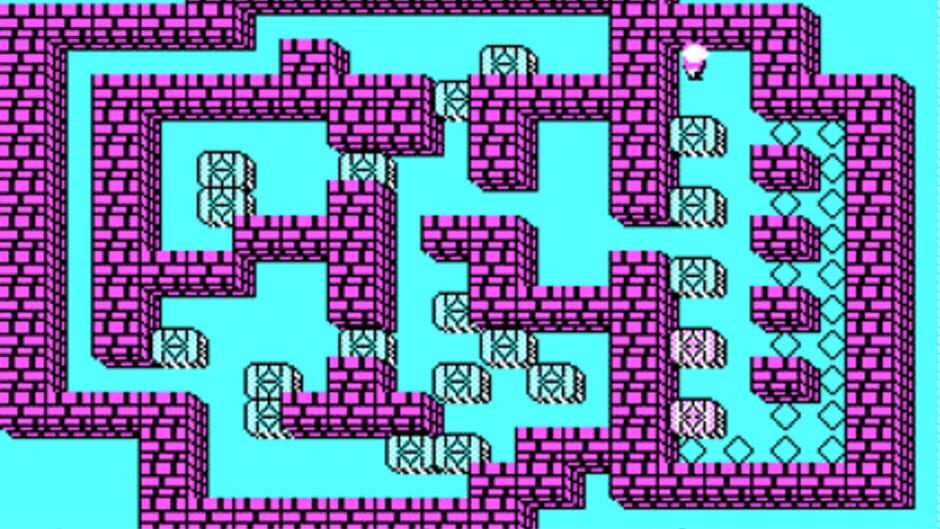
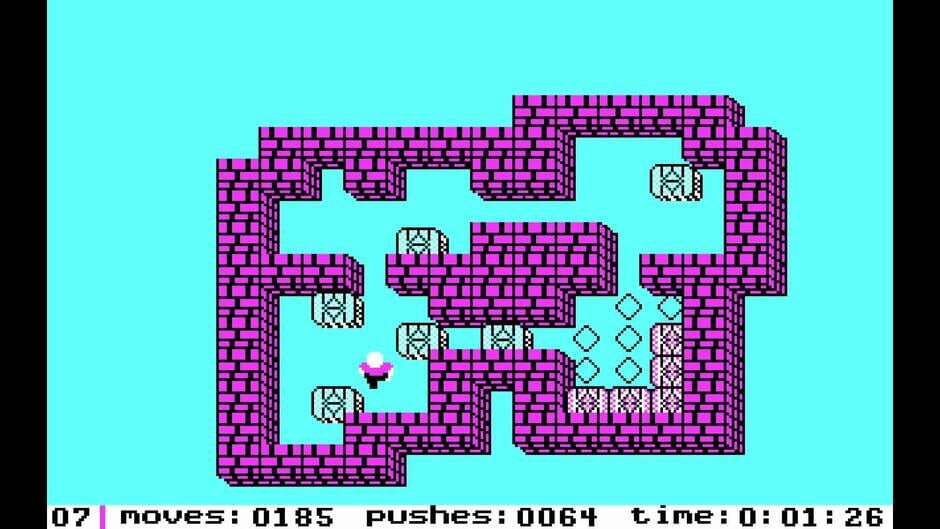
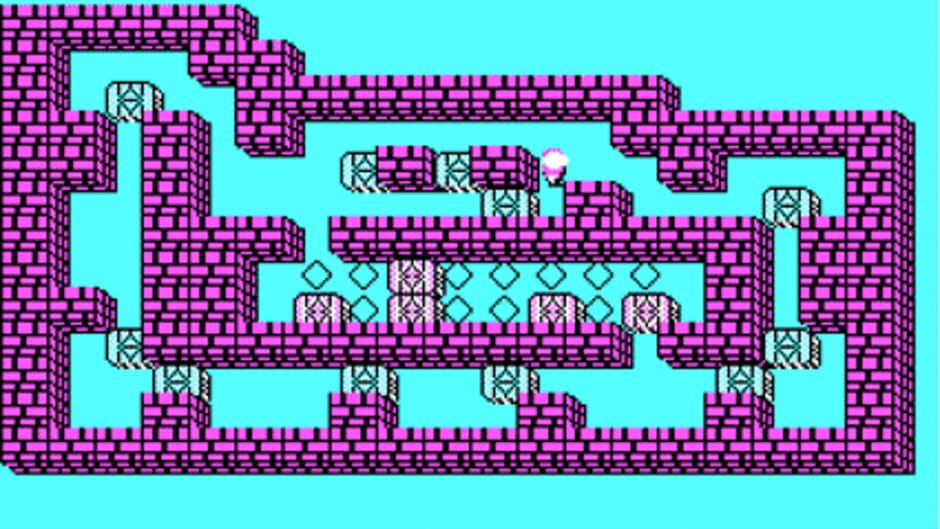
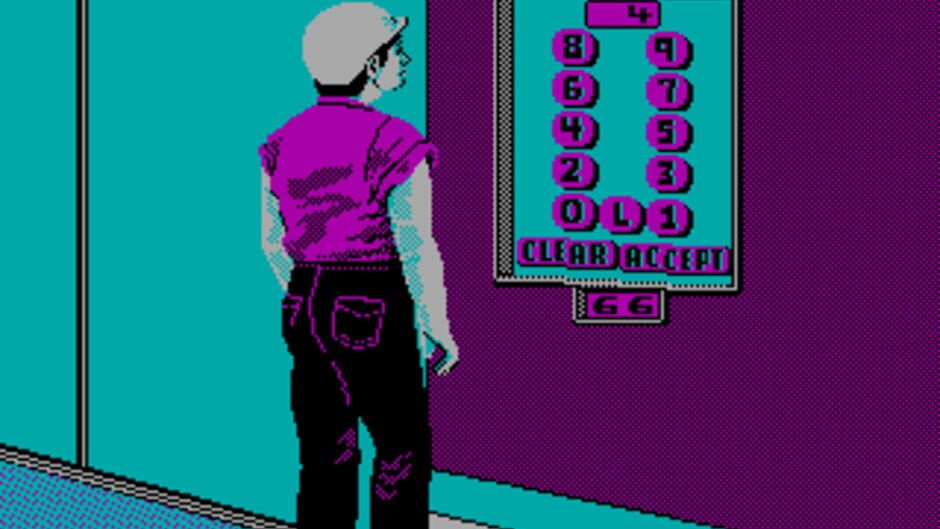
Sokoban ("warehouse keeper") is a is a classic puzzle game created in 1981 by Hiroyuki Imabayashi, and published in 1982 by Thinking Rabbit, a software house based in Takarazuka, Japan. In 1984 the ASCII Corporation published a version produced by Khaled Bentebal. It was the basis of numerous clones in the later years. It is set in a warehouse. On each level, the player must push crates (from square to square) to get them onto designated spots; once each crate is on a marked spot, the level is complete. Crates can only be pushed one at a time (so two crates next to each other cannot be pushed together), and cannot be pulled--so it's possible to get a crate stuck in a corner, where it cannot be retrieved! By the last levels, you must plan 40 steps in advance.
Developers
Thinking Rabbit
Publishers
Spectrum HoloByte, Inc. • Thinking Rabbit • Tandy • Sega Enterprises, Ltd. • ASCII Corporation
Screenshots
Videos
External Links
Similar Games
The Legend of Zelda: A Link to the Past
199196 (1,670)
PuzzleAdventure
Satellaview • Super Nintendo Entertainment System • Wii
Venture back to Hyrule and an age of magic and heroes. The predecessors of Link and Zelda face monsters on the march when a menacing magician takes over the kingdom. Only you can prevent his evil plot from shattering the land of Hyrule. In your quest, you'll venture into twisting mazes, dungeons, palaces and shadowy forests. Test your mettle with mighty swords and magical weapons. Or heft a boulder and hurl it at your enemies. If the going gets tough, dive into a river - you can swim to escape! Learn powerful spells, locate magical artifacts and solve the mysteries of the evil magician and the hidden realm of Hyrule.
The Legend of Zelda: Four Swords Adventures
200477.8 (77)
PuzzleAdventure
Nintendo GameCube
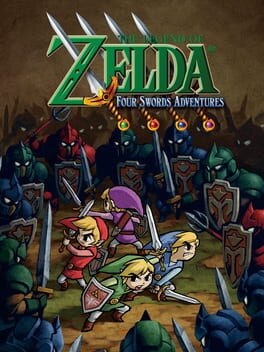
The Legend of Zelda: Four Swords Adventures is the only console Zelda title to date to incorporate multiplayer elements into its main campaign. Because of its single-player elements, Four Swords Adventures is also the first game in the series to allow a single player to control more than one Link at once, and it utilizes various methods to allow the player to make use of the four Links, such as formations. Also it is the only title to break locations and temples up into succinct, separate stages and levels which can be replayed even after beating them once. The game itself, though an innovation in Zelda gameplay, is heavily inspired by the music, graphics, and locations of A Link to the Past.
The Legend of Zelda: The Minish Cap
200487.2 (431)
PuzzleAdventure
Nintendo 3DS • Wii U • Game Boy Advance
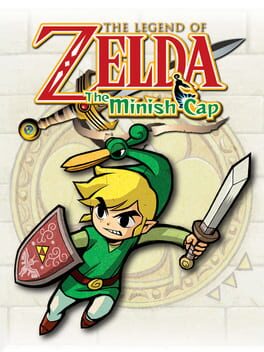
The Legend of Zelda: The Minish Cap is a top-down action adventure game that tells the origins of the evil Vaati from Four Swords. Like most other titles in the series, The Minish Cap features the fully explorable land of Hyrule, although it can be viewed from the eyes of a human or the eyes of a Minish, a race of tiny people and an alternate form that Link can transform into. Unlike the multiplayer focus of the other games in the series, The Minish Cap retains the original form of exploration and dungeons as seen in A Link to the Past, Oracle of Seasons, and Oracle of Ages, as well as returning characters and game mechanics such as Malon and the Spin Attack. New features include fusing Kinstones and shrinking to the size of a Minish.
The Legend of Zelda: Ocarina of Time
199891.5 (2,089)
PuzzleAdventure
Wii • Nintendo 64 • 64DD
The Legend of Zelda: Ocarina of Time is the fifth main installment of The Legend of Zelda series and the first to be released for the Nintendo 64. It was one of the most highly anticipated games of its age, and is listed among the greatest video games ever created by numerous websites and magazines. The gameplay of Ocarina of Time was revolutionary for its time, it has arguably made more of an impact on later games in the series than any of its predecessors even though they had the same cores of exploration, dungeons, puzzles and item usage. Among the gameplay mechanics, one of the most noteworthy is the time-traveling system. The game begins with the player controlling the child Link, but later on an adult Link becomes a playable character as well and each of them has certain unique abilities. Ocarina of Time also introduces the use of music to solve puzzles: as new songs are learned, they can be used to solve puzzles, gain access to new areas and warp to different locations. Dungeon exploration is somewhat more puzzle-oriented than in earlier games but they are not too complex.
The Legend of Zelda: Oracle of Seasons
200187.2 (196)
PuzzleAdventure
Game Boy Color • Nintendo 3DS
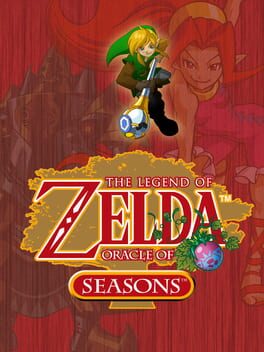
The Legend of Zelda: Oracle of Seasons is one of two Zelda titles released for the Game Boy Color, the other being Oracle of Ages. The game retain many gameplay elements from Link's Awakening such as the graphics, audio and top-view perspective. It also features eight dungeons and a large overworld to explore like in the previous games. Oracle of Seasons is said to be more action-oriented than its counterpart being more puzzle-oriented. After completing one of the two games, both can be linked to form a single linear plot with an alternate ending. Oracle of Seasons and Oracle of Ages were often credited as being two of the top games for the Game Boy Color.
The Legend of Zelda: Breath of the Wild
201795 (2,876)
PuzzleAdventure
Wii U • Nintendo Switch
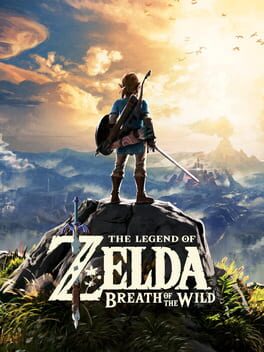
The Legend of Zelda: Breath of the Wild is the first 3D open-world game in the Zelda series. Link can travel anywhere and be equipped with weapons and armor found throughout the world to grant him various bonuses. Unlike many games in the series, Breath of the Wild does not impose a specific order in which quests or dungeons must be completed. While the game still has environmental obstacles such as weather effects, inhospitable lands, or powerful enemies, many of them can be overcome using the right method. A lot of critics ranked Breath of the Wild as one of the best video games of all time.